I've been blogging and working online for years, and one thing I've learned is that you don't need to be a professional writer, a famous traveler, or someone with millions of followers to start a travel blog.
You just need to start.
A travel blog can be a place where you share your trips, publish travel guides, help other travelers, document your experiences, and eventually build a business around your knowledge.
And that's what makes travel blogging interesting.
Your blog can start as a personal project and eventually become an income-generating business.
You can make money through affiliate marketing, advertising, sponsored content, digital products, services, brand partnerships, and several other methods.
But before you can make money, you need to build the foundation.
In this guide, I'll show you how to start a travel blog from scratch, what you need to spend money on, how to set up your website, what you should write about, how to get readers, and all the different ways you can make money from your travel blog.
Let's start from the beginning.
What Do You Need to Start a Travel Blog?
You don't need much.
At the most basic level, you need:
- A domain name
- Web hosting
- WordPress
- A website design
- A topic or niche
- Good content
- Time and consistency
You don't need a huge social media following.
You don't even need to travel constantly.
You can start with the trips you've already taken and the knowledge you've gained from them.
The important thing is to create something useful for other people.
Step 1: Choose a Name for Your Travel Blog
The first thing you need is a name.
Your domain name is the address people will type into their browser to find your website.
For example:
YourTravelName.com
I'd recommend keeping your domain relatively short, easy to spell, and easy to remember.
Avoid complicated words, unnecessary hyphens, and names that are difficult to pronounce.
If possible, I'd also choose a name that gives you room to grow.
For example, if you name your blog something extremely specific like BackpackingThailand2026.com, you're going to have a problem if you later decide to write about Japan, Europe, or the United States.
Think long term.
Your travel blog might eventually become much bigger than your original idea.
Where Should You Buy Your Domain?
You have several options.
One option is to buy both your domain and hosting from the same company, which makes the setup simpler.
Another option is to buy your domain separately and connect it to your hosting.
I've personally found Spaceship interesting for people who want an affordable domain registrar.
At the time I'm writing this, Spaceship lists `.com` domains at $8.88 for the first year and $9.98 for renewal, before the applicable ICANN fee. It also includes free domain privacy on eligible domains.
You can use Spaceship just for the domain and host your website somewhere else.
Step 2: Choose Your Web Hosting
After buying your domain, you need somewhere to host your website.
Think of it this way:
Domain = your website's address
Hosting = the place where your website lives
For a new travel blog, I'd recommend using WordPress rather than building everything from scratch.
And if you want affordable WordPress hosting, Hostinger is one of the options I'd look at.
Hostinger currently offers managed WordPress hosting with features such as SSL, backups, CDN options, WordPress tools, and 24/7 support. Its US pricing page currently shows promotional pricing from $2.99/month on a 48-month Premium plan, with renewal pricing higher after the initial term. Pricing and promotions can change, so check the current offer before purchasing.
You can check Hostinger here.
The nice thing is that you have several ways to set things up.
Option 1: Buy Everything From Hostinger
This is probably the easiest option for a complete beginner.
You can purchase your hosting and domain together and install WordPress.
You don't have to worry about connecting a domain from one company to hosting at another company.
It's simple.
Option 2: Buy the Domain From Spaceship and Hosting From Hostinger
This is another setup I like.
You can buy your domain from Spaceship and your hosting from Hostinger.
Then you connect the Spaceship domain to your Hostinger hosting account.
This gives you more flexibility because your domain and hosting are separate.
If you decide to move hosting companies later, you don't necessarily have to move your domain at the same time.
You can check Spaceship here.
Option 3: Buy the Domain and Hosting Separately
You can also use whichever domain registrar and hosting company you prefer.
There isn't a rule saying your domain and hosting have to come from the same company.
For a beginner, though, I'd keep things simple unless you have a specific reason to separate them.
Step 3: Install WordPress
Once WordPress is installed, you'll have access to your dashboard.
WordPress is one of the most popular content management systems in the world, and it's particularly useful for bloggers because you can create posts, pages, categories, menus, and many other features without having to code everything yourself.
Most beginner-friendly hosting providers make the WordPress installation relatively straightforward.
Once WordPress is installed, you'll have access to your dashboard.
This is where you'll create your travel blog.
Step 4: Choose a Travel Blog Theme
Now comes the fun part.
Your website needs a design.
You have two main choices.
Option 1: Buy a WordPress Theme
If you want to design the website yourself, you can buy a professional WordPress theme from ThemeForest.
There are currently hundreds of travel-related WordPress themes listed there, including themes specifically designed for travel blogs and travel websites.
You can browse WordPress themes on ThemeForest here.
Don't just choose a theme because it looks beautiful in the demo.
Before buying, check:
- When it was last updated
- Whether it's compatible with your version of WordPress
- Whether it is responsive
- Whether the developer provides support
- Whether it works with the plugins you need
- Whether the demo content is easy to customize
- Whether the theme is optimized for speed
Option 2: Hire Someone to Design Your Travel Blog
If you don't want to deal with WordPress themes, plugins, layouts, menus, typography, mobile responsiveness, and all the technical stuff, you can simply hire someone to build the website for you.
That's actually what I do.
If you'd rather focus on your travel content instead of spending days trying to figure out WordPress, you can hire me to design your travel blog.
I'll help you set up the website and guide you through what you need so you can focus on what actually matters: publishing useful content and building your audience.
You can check out my web design service here.
Or contact me directly if you want to discuss your project.
Step 5: Create the Important Pages
Before publishing dozens of travel articles, create the basic pages your website needs.
At minimum, I'd create:
About Page
Tell readers who you are, where you travel, and why they should listen to you.
Don't make it a boring resume.
Tell your story.
Contact Page
Give readers a way to contact you.
This is also important later when brands, tourism companies, and other businesses want to work with you.
Privacy Policy
You'll need an appropriate privacy policy for your website, especially if you're collecting information from visitors or using advertising, analytics, email marketing, or other services.
Terms and Conditions
Depending on what you're doing with your website, you may also want terms and conditions.
Affiliate Disclosure
If you're using affiliate links, clearly disclose your affiliate relationships.
You don't need to hide the fact that you make commissions.
In fact, being transparent can make your readers trust you more.
Step 6: Choose Your Travel Blog Niche
You don't necessarily need to create a blog about "travel."
That's too broad.
You can, but it becomes much harder to stand out.
Instead, think about what kind of traveler you want to help.
For example:
- Budget travel
- Luxury travel
- Solo travel
- Backpacking
- Family travel
- Digital nomad travel
- Adventure travel
- Hiking and trekking
- Road trips
- Travel for couples
- Sustainable travel
- Accessible travel
- Travel in a particular country or region
For example:
Budget Travel + Southeast Asia
or
Solo Travel + Hiking
or
Digital Nomad Travel + Long-Term Travel
The more specific your audience is, the easier it can be to create content that genuinely solves their problems.
Step 7: Start Creating Useful Content
This is where your travel blog actually begins.
Don't publish articles just because you need to publish something.
Think about what travelers are searching for.
Someone might search:
How much does a trip to Japan cost?
Best things to do in Tokyo
How to travel Japan by train
Best hostels in Bangkok
Is Bali expensive?
How to get from the airport to downtown
What should I pack for a two-week trip?
These are the types of questions your blog can answer.
And you don't need to write about everything.
Start with topics you actually know.
Your own experiences can become some of your best content.
Write From Experience Whenever Possible
One thing that can make a travel blog stand out is first-hand experience.
If you've actually stayed at a hostel, tell people what it was like.
If you've taken a particular train route, explain how it worked.
If you've hiked a particular trail, tell readers what they should expect.
If you've spent a month in a city, you can provide information that someone who visited for two days simply can't provide.
Your experience is valuable.
Don't underestimate it.
Step 8: Learn Basic SEO
SEO stands for search engine optimization.
You don't need to become an SEO expert before starting your blog.
But you should understand the basics.
When someone searches Google for something like:
"best things to do in New York"
Google has to decide which pages to show.
Your job is to create a page that genuinely answers the searcher's question better than competing pages.
That means:
- Understanding search intent
- Choosing useful topics
- Creating helpful titles
- Using headings properly
- Writing useful content
- Linking between related articles
- Optimizing images
- Making your website fast
- Building authority over time
Write for humans first.
For example, if you're writing about travel insurance for backpackers, you can create a detailed guide answering common questions travelers have before buying a policy. I also have an article on the best travel insurance for backpackers that you can use as an example of this type of useful, search-focused travel content.
Step 9: Build an Audience
Getting traffic takes time.
You can get visitors from:
- TikTok
- YouTube
- Email newsletters
- Other websites
- Direct traffic
I'd rather see you become really good at one or two traffic sources than create seven social media accounts that you barely maintain.
For a travel blog, Google search can be particularly valuable because people are constantly searching for travel information.
But don't depend entirely on Google.
Build an email list.
Build social media accounts.
Create relationships with other creators.
Your website should be an asset that you control.
How to Make Money From a Travel Blog
Now we get to the part everyone wants to know about.
How do travel bloggers actually make money?
There isn't just one answer.
In fact, one of the biggest advantages of having a travel blog is that you can build multiple income streams around the same audience.
Here are some of the most common ones.
1. Affiliate Marketing
Affiliate marketing is one of my favorite ways to monetize a travel website.
The basic idea is simple.
You recommend a product or service.
Someone clicks your special affiliate link and makes a purchase.
You receive a commission.
Travel is particularly well suited to affiliate marketing because travelers already need things.
They need:
- Hotels
- Flights
- Travel insurance
- Tours
- Transportation
- eSIMs
- Travel gear
- Luggage
- Cameras
- Software
- Travel credit cards
- Booking services
For example:
Best Travel Insurance for Digital Nomads
Best Travel Backpacks for Long-Term Travel
How to Find Cheap Hotels
Best eSIMs for International Travel
The key is to recommend things you genuinely believe are useful.
Don't turn every paragraph into an affiliate pitch.
2. Display Advertising
Once your blog gets enough traffic, you can monetize your website with display advertising.
Ad networks place advertisements on your pages and you earn money based on factors such as traffic, ad impressions, and advertiser demand.
This can become a useful passive income stream once you have substantial traffic.
But don't start a travel blog purely for ads.
You need visitors first.
3. Sponsored Posts
Travel companies, hotels, tourism boards, travel brands, and other businesses may pay you to publish sponsored content.
For example, a hotel might pay you to write about a destination.
A travel company might sponsor a guide.
A luggage company might pay for a product feature.
The amount you can charge depends on things like your traffic, audience, authority, niche, content quality, and what exactly the sponsor wants.
And always be transparent about sponsored content.
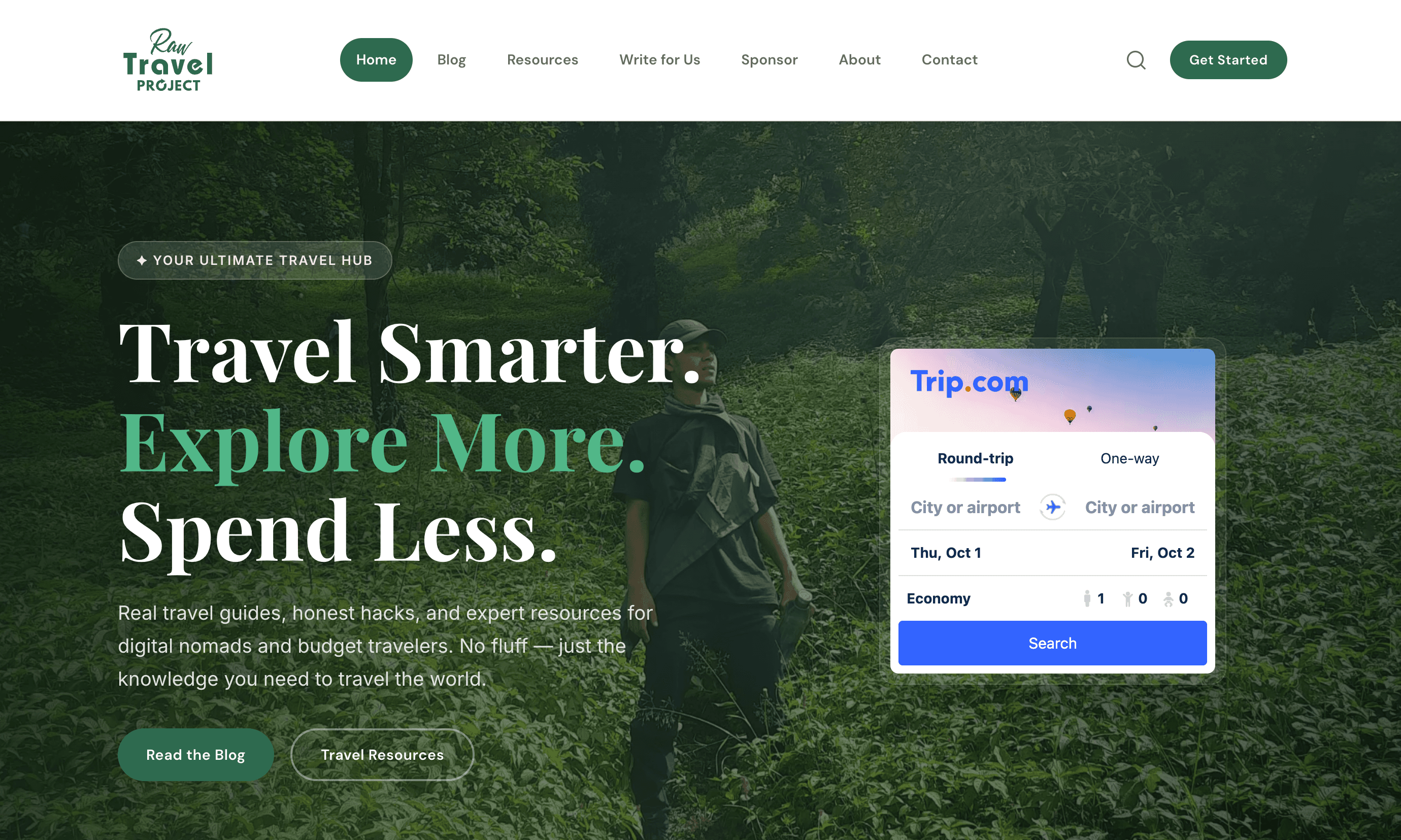
I also regularly publish sponsored posts on my websites, including RawTravelProject.com, InuEtc.com, and Inuidea.com. If you're a brand, business, or website owner looking to reach an established audience through a sponsored article or relevant promotional content, you can learn more about working with me here or contact me directly.
4. Brand Partnerships
You can also work directly with brands.
This can include:
- Sponsored articles
- Social media campaigns
- Instagram posts
- YouTube videos
- Photography
- Video content
- Product reviews
- UGC
- Long-term brand partnerships
A smaller but highly relevant audience can be valuable to the right brand.
5. Sell Digital Products
This is one of the most interesting ways to monetize a travel blog because you create something once and can potentially sell it repeatedly.
You could sell:
- Travel guides
- Destination itineraries
- Packing lists
- Travel planners
- Notion templates
- Budget spreadsheets
- Travel checklists
- Lightroom presets
- Photography guides
- Travel ebooks
- Maps
- Printable planners
You don't need millions of visitors.
You need the right visitors.
I also created a simple guide called Build & Sell What’s Already Selling, where I share a practical approach to finding profitable digital product ideas, understanding what people are already buying, and creating and marketing your own products without unnecessary guesswork. If you want to learn how to build and sell digital products, check out the guide here.
You can also visit my Gumroad store to see my other digital products and guides.
6. Sell Online Courses
If you've developed expertise in something, you can create a course.
For example:
How to Start a Travel Blog
How to Become a Digital Nomad
How to Travel on a Budget
Travel Photography for Beginners
How to Work While Traveling
Your blog becomes the place where you demonstrate your expertise and attract potential customers.
7. Offer Travel Consulting
You can also sell your knowledge directly.
People may pay you to help them:
- Plan a trip
- Build an itinerary
- Choose destinations
- Plan long-term travel
- Plan a backpacking trip
- Find accommodation
- Create a travel budget
Your blog content can help establish your expertise before someone ever books a consultation.
8. Sell Your Services
Your travel blog doesn't have to make money only from travel-related products.
You can also use it to generate clients.
For example, if you're a:
- Web designer
- Photographer
- Videographer
- Writer
- SEO consultant
- Social media manager
- Travel planner
- Graphic designer
That's actually a very powerful model.
Your blog brings people to your website, and some of those visitors can become clients.
9. Freelance Writing
If you're good at writing, your travel blog can help you get freelance writing clients.
Travel publications, magazines, tourism companies, hotels, and other websites often need travel content.
Your own blog gives potential clients somewhere to see your writing.
Instead of saying:
"I'm a travel writer."
you can show them your work.
That's much more convincing.
10. YouTube
You don't have to choose between a travel blog and YouTube.
Use them together.
A YouTube video can bring traffic to your website.
A blog article can bring viewers to your YouTube channel.
You can monetize YouTube through advertising, sponsorships, affiliate marketing, memberships, products, and other revenue streams.
For example, you could write:
Complete Guide to Traveling in Thailand
and create a YouTube video covering the same trip.
Each platform supports the other.
11. Sell Photography and Video
If you're a photographer or videographer, you can use your travel blog to promote your work.
Potential income streams include:
- Stock photography
- Print sales
- Licensing
- Commercial photography
- Tourism campaigns
- Hotel photography
- Destination videos
- UGC
- Brand content
12. Create a Paid Newsletter
You can also build an email newsletter around your travel niche.
A free newsletter can help you build an audience.
Later, you could create a paid version offering exclusive:
- Travel deals
- Destination guides
- Itineraries
- Travel research
- Travel planning advice
- Industry insights
13. Memberships and Communities
You can create a paid community for your audience.
For example:
$5/month travel community
You could offer:
- Private discussions
- Travel planning help
- Monthly Q&A sessions
- Exclusive guides
- Destination recommendations
- Group trips
- Member-only content
14. Tourism Board Partnerships
Once your travel blog becomes established, you can potentially work with tourism boards and destination marketing organizations.
They may invite creators to:
- Visit destinations
- Create content
- Attend events
- Cover campaigns
- Produce photography and video
- Publish destination guides
15. Create and Sell Travel Experiences
If you eventually build a strong travel brand, you could move beyond content.
You might organize:
- Group trips
- Treks
- Workshops
- Retreats
- Photography trips
- Local experiences
But it also comes with additional operational, legal, insurance, and financial responsibilities, so it's something to approach carefully.
You Don't Need to Use Every Monetization Method
This is important.
When you read a list like this, you might think:
"I need to do all of these."
No.
You don't.
Start with one or two.
For example:
Travel blog → SEO traffic → affiliate marketing
That's already a business model.
Or:
Travel blog → audience → digital products
Or:
Travel blog → audience → services
Or:
Travel blog → traffic → advertising + affiliate marketing
Once one income stream starts working, you can add another.
How Long Does It Take to Make Money?
This is probably the hardest question to answer.
There is no guaranteed timeline.
Some blogs make money relatively quickly.
Others take years.
Your results depend on things like:
- Your niche
- Content quality
- Publishing consistency
- SEO
- Competition
- Audience
- Monetization strategy
- Marketing
- Your ability to create something people actually want
Start by building something useful.
Then build traffic.
Then build trust.
Then monetize that attention.
How Much Does It Cost to Start a Travel Blog?
You can start relatively cheaply.
Your basic expenses could include:
Domain: roughly $9–$15 per year depending on the registrar and extension.
Hosting: can be relatively inexpensive with an introductory hosting plan.
WordPress: Free.
Theme: Free or paid.
Plugins: Many have free versions.
You can therefore start a basic travel blog without spending hundreds or thousands of dollars.
And you don't need expensive equipment.
You can write articles using the computer you already own.
You can take photos with your existing phone.
You can improve the website later as your blog grows.
My Recommended Beginner Setup
If I were starting a travel blog from scratch today, I'd keep the setup simple.
Domain
I'd choose a short, brandable `.com` domain.
I'd consider Spaceship if I wanted to purchase the domain separately.
Hosting
I'd use Hostinger for affordable WordPress hosting.
Website
I'd install WordPress.
Theme
I'd either choose a good lightweight WordPress theme or browse ThemeForest for a travel-focused design.
Content
I'd start publishing useful, experience-based travel content.
Traffic
I'd focus heavily on SEO while also building one social media channel and an email list.
Monetization
I'd start with affiliate marketing and gradually add other income streams.
And once the blog has an audience, I'd consider digital products, sponsorships, services, advertising, and other opportunities.
Final Thoughts
Starting a travel blog is easier than it used to be.
You don't need to know how to code.
You don't need a massive budget.
You don't need thousands of followers before you publish your first article.
You need a domain, hosting, WordPress, a decent design, and most importantly, something useful to say.
For the technical setup, you can keep it simple by buying your domain and hosting from the same provider, or you can buy your domain separately from a registrar like Spaceship and connect it to hosting such as Hostinger.
If you want to design the website yourself, you can find plenty of travel WordPress themes on ThemeForest.
And if you don't want to deal with the technical side at all, you can hire me to design your travel blog and I'll help you get the website set up properly.
But remember: the website itself isn't the business.
Your content, audience, expertise, and ability to solve problems for travelers are what create the business.
Once people start finding your content, you have many ways to monetize that audience.
You can make money from affiliate marketing, advertising, sponsored posts, brand partnerships, digital products, courses, consulting, freelance work, YouTube, photography, newsletters, memberships, tourism partnerships, and even your own travel experiences.
You don't have to choose all of them.
Start with one.
Build something useful.
Learn what your audience wants.
Then build from there.
That's how I'd approach travel blogging today.
And if you're waiting for the "perfect time" to start your travel blog, you probably already have everything you need.
Just start.